

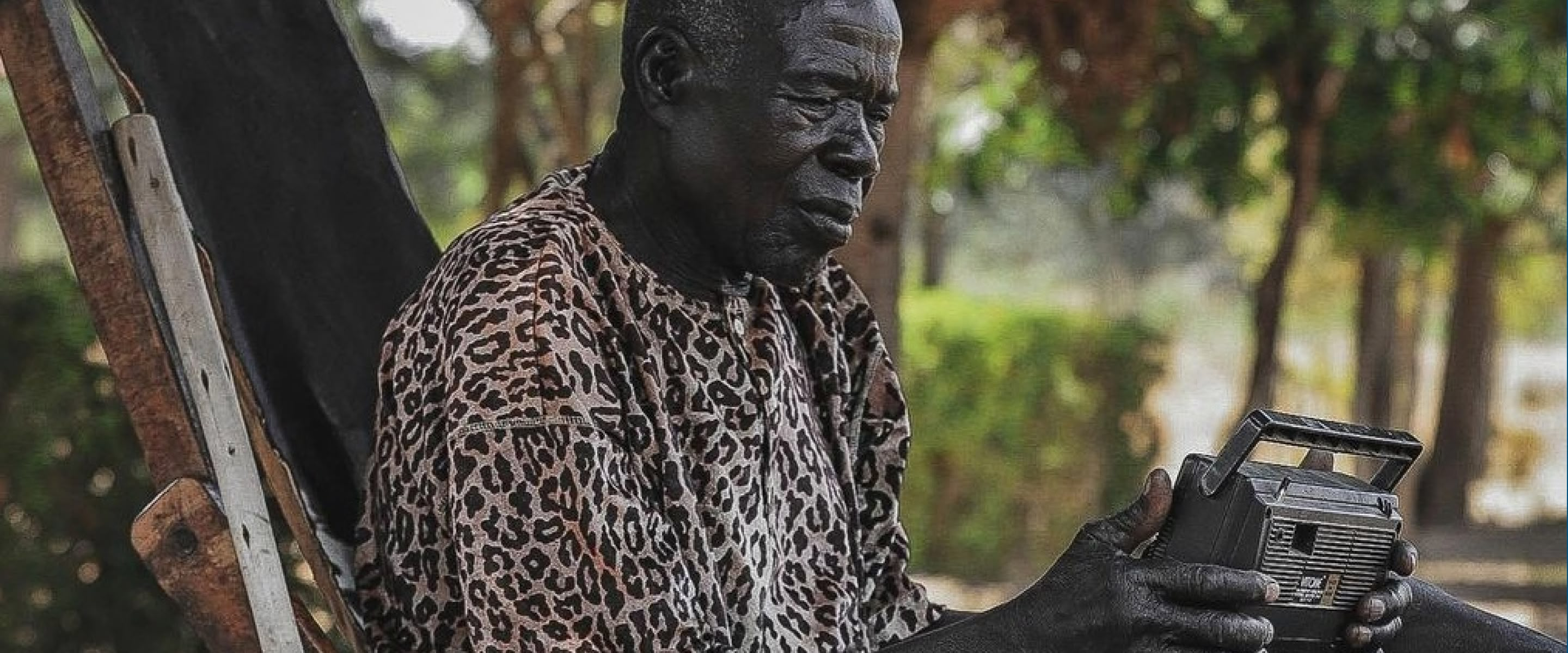
Forgotten. Invisible. Silent. These words are often used to describe the 30-year-old military conflict in the Democratic Republic of Congo (DRC). Also dubbed a “forever war,” the conflict is considered a complex, unresolvable, unending cycle of civil unrest. An estimated six million people have died in the conflict since 1996.
A United Nations probe into war crimes has stalled due to lack of funding. The healthcare system wobbles on the verge of collapse, exacerbating the deleterious conditions of the conflict. The Congolese people are starved of both food and information.
Rwanda and the DRC recently signed a peace deal, but whether this will bring lasting stability or repeat the cycle of exploitation remains uncertain. What is certain is that the Congolese people will continue to need trusted sources of information on health, economics, humanitarian relief, and the long road to recovery. In this context, radio, with the potential to reach even the most remote communities, offers a lifeline.
A systematic review of 50 studies on mental health outcomes, literacy, and service provision in the DRC showed that wartime sexual violence and extreme poverty are highly traumatic and cause multiple long-term mental health difficulties. Not surprisingly, anxiety, depression, and PTSD were the most common effects.
The review also highlighted the need for culturally appropriate validation and better public mental health systems and services to improve community cohesion, human resilience, and mental wellbeing. These recommendations also address wider social issues such as poverty, stigma, and gender inequality — all of which are social determinants of health.
This is where the life-saving power of radio comes in. This technology has been a critical tool in reaching widespread communities since its invention and popular use in the early 20th century. Even with the massive growth of digital technologies over the past 30 years, radio remains a viable channel, with experts in the field available and well-positioned to disseminate credible information to vulnerable populations.
Airing information in the local language with high reach can transform social life in the DRC by focusing on sustainable development and well-being, disease prevention, and the creation of opportunities to fight poverty through income-generating activities.
Radio broadcasts are inexpensive and occur quickly and easily compared to other means of mass communication. This enables reaching people with limited access to relevant health services due to cost, distance, or stigma associated with their condition.
Radio is the most effective way to spread updated information to communities isolated by war-related conditions such as destroyed roads and bridges and the presence of rebel groups, as well as varied local language barriers. This is important especially for those internally displaced and others in refugee camps.
Many displaced people still have a small radio among their belongings. And even though electricity access is extremely low, most of these radios use rechargeable batteries or non-rechargeable batteries that are available in small village shops.
Communities around the world have often turned to radio as a vital medium for survival in conflict settings. Popular movies and novels have dramatized the use of this technology by World War II resistance fighters to coordinate actions against oppressive forces.
The use of radio during the Bangladesh Liberation War is another remarkable example. The Shadhin Bangla Betar Kendra radio station had to keep shifting locations to survive attacks by the occupying Pakistani forces. All the while the station coordinated resistance, documented war crimes, and produced numerous resistance songs that inspired generations even after the country’s independence, encouraging patriotism and opposition to tyranny.
In Bangladesh today we still see networks of grassroots community radios delivering a mix of entertainment, education, and information. They broadcast early warnings of floods and cyclones, disseminate climate-adaptive agricultural practices and health advisories, and raise awareness to combat violence against women. Many other types of media have become popular worldwide and in Bangladesh, but radio has not lost its charm, especially for grassroots and marginalized voices.
Obviously, in a complex place like the DRC, no solution is simple. Radio alone cannot heal trauma, replace a shattered health system, or resolve decades of political instability. There are significant social, legal, and political challenges that demand attention. Any effective solution must be locally rooted and involve collaboration with provincial leaders, national governance, and community-based institutions, including faith groups.
Yet, even amid uncertainty, we should not underestimate the power of trusted information. In a nation where roads may be impassable and infrastructure in ruins, the humble radio remains an open channel, connecting people to life-saving knowledge, collective healing, and the hope of something better. Radio, when harnessed strategically, can do more than inform. It can inspire and mobilize.
In war-torn Congo, radio is more than a potential public health tool. It offers a lifeline.
-
About the co-authors
Ganzamungu Zihindula, Atlantic Fellow for Health Equity in South Africa, and founder and executive director of ATRASID in the Democratic Republic of the Congo.
Kevin Liverpool, Atlantic Fellow for Social and Economic Equity, and a violence prevention practitioner based in the Caribbean.
Enam Siddique, Atlantic Fellow for Social and Economic Equity, and an environmental justice and humanitarian professional based in Bangladesh.
This article first appeared on the Inequality.org website.
-
Photo Credit
Asunta sura, CC BY-SA 4.0 <https://creativecommons.org/licenses/by-sa/4.0>, via Wikimedia Commons



.png)

