

.jpg)
.jpeg)
At this year’s Berlin Science Week, neuroscientist and Atlantic Fellow for Equity in Brain Health Agustín Ibáñez and I shared a stage to explore an unexpected connection: what aerial photographs of divided cities and brain scans of aging people might have in common. Our talk, “Unequal Scenes: Communicating Aerial Photography and Neuroscience,” asked how art and science speak to each other, validate each other, and how they can reveal the invisible social, environmental, and biological forces that shape our lives.
Ibáñez is the founding director of the Latin American Brain Health Institute (BrainLat) at Universidad Adolfo Ibáñez in Chile and a principal investigator with the Global Brain Health Institute (GBHI) at Trinity College Dublin. Through these institutions, he has built an extensive, transnational network of researchers linking neuroscience with public health, epidemiology, and social science. His research on exposomes, the cumulative environmental exposures that influence brain health, maps how factors like pollution, stress, and inequality can leave biological fingerprints in the mind. His work moves beyond the traditional biomedical model of disease to incorporate how inequality, violence, and chronic stress influence neural development and degeneration.
My aerial photography from the Unequal Scenes project parallels Agustín’s approach to understanding neuroscience by visualizing inequality’s imprint on the world’s largest cities. From above, I document how spatial divides formed by policy, history, and stress mirror the hidden neurological scars of unequal exposomes, revealing how place and power shape both bodies and brains. Over eight years, and through fellowships such as the Atlantic Fellowship for Social and Economic Equity at the London School of Economics and at Code for Africa, I have worked to reveal that inequality is not a natural or inevitable outcome. In fact, Code for Africa helped me to found africanDRONE, a pan-African network of drone pilots, journalists and technologists helping to prove that with their own drone imaging. We seek a broader understanding of how the world works - pulling each thread to unravel interconnections that are designed to be hidden. My photographs are data, the collection of which forms a visual database of exposure, showing how architecture, planning, and resource distribution orchestrate unequal exposomes that advantage some while constraining others.
At GBHI and through collaborations across the world, Ibáñez has built a framework showing that the brain is not just a biological organ but a social sensor, constantly adapting to the environments and injustices it inhabits. His studies on accelerated brain aging reveal that people living under persistent social stress due to poverty, marginalization, or environmental toxicity often show patterns of neural atrophy or metabolic dysfunction equivalent to individuals years older. These studies demonstrate that even those living in relative affluence within unequal countries such as Chile, South Africa, or Brazil have brains that appear older than those in more equal nations. There is no way to fully insulate oneself from the effects of inequality; our social fabric, political systems, health outcomes, and ability to thrive are all deeply interconnected.
We can also see these patterns from above. Just as we can detect accelerated brain aging in scans, we can observe the visible morphology of inequality through aerial photography, which becomes a kind of macro-neurology, mapping the external anatomy of inequality as clearly as neuroscience maps its internal effects. From altitude, patterns of segregation, pollution, and infrastructure scarcity become legible, providing spatial evidence that complements neural data.
By visually documenting where and how inequality is built into the landscape, photography helps translate complex exposome research into intuitive, emotional knowledge.
Moving forward, our shared task is to connect these layers, translating visual and scientific insight into public discourse, policy, and personal reflection. There are several exciting next steps, including a potential for more polysemic discourses between artists and scientists in Berlin in 2026, and hopefully in more cities as well. Multiple articles are in the pipeline describing the links between exposomes, creativity and brain health, many of them in top journals.
By bridging art and neuroscience, we can move from recognition to response, using images and data to catalyze empathy, inform urban design, and inspire behavioral change at both individual and societal levels. We hope that through talks like this one, with the support of platforms such as Berlin Science Week and Creative Brain Week, academic and civil society collaborations, and even deepening the conversation within the art world, more partnerships between artists, researchers, policymakers, and communicators will take root and flourish.
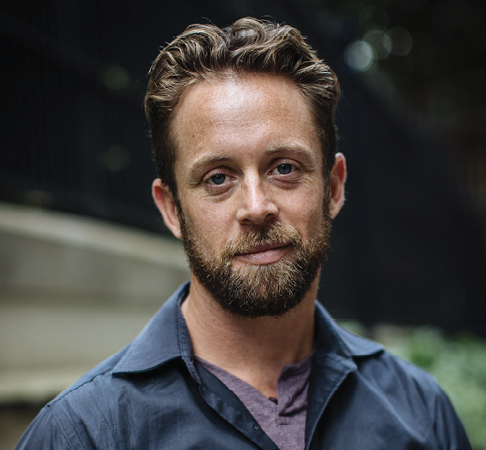
Johnny Miller is an Atlantic Fellow for Social and Economic Equity at the London School of Economics.
His project is www.unequalscenes.com, and his Instagram is here.
Agustin Ibanez is an Atlantic Fellow for Equity in Brain Health and Director of the Latin American Brain Health Institute (BrainLat) at Universidad Adolfo Ibáñez (Chile).
His LinkedIn is here.


.png)

