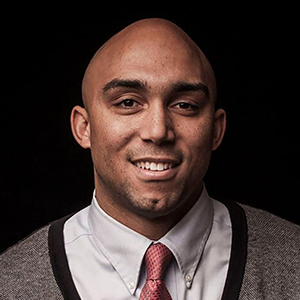
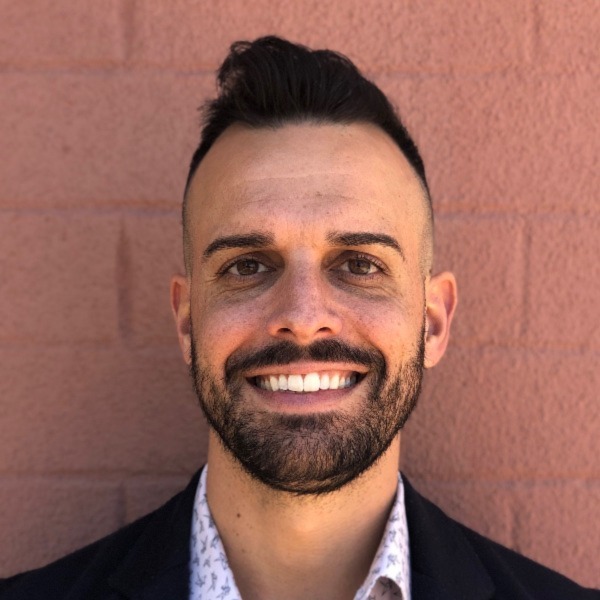
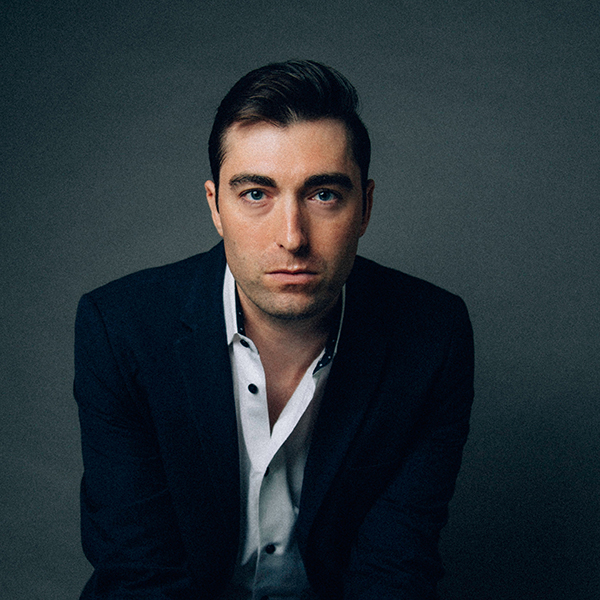
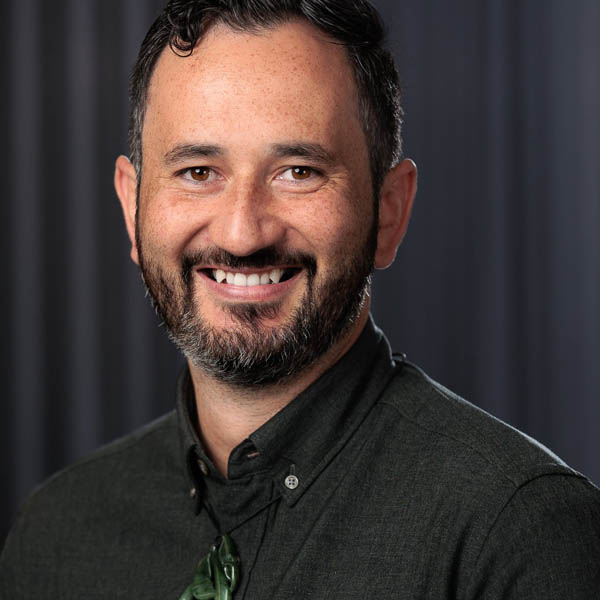
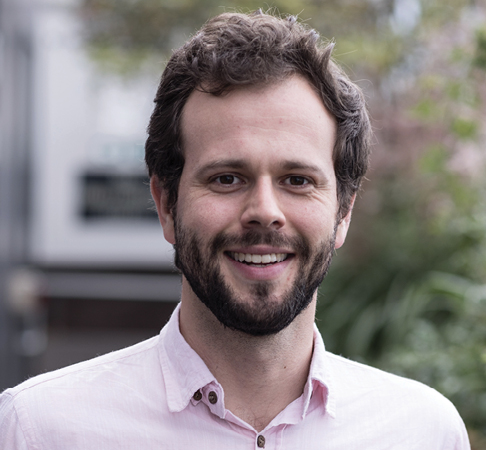
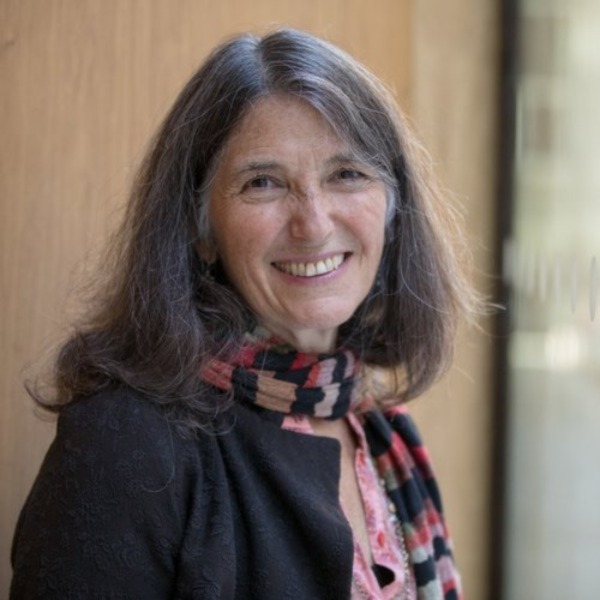
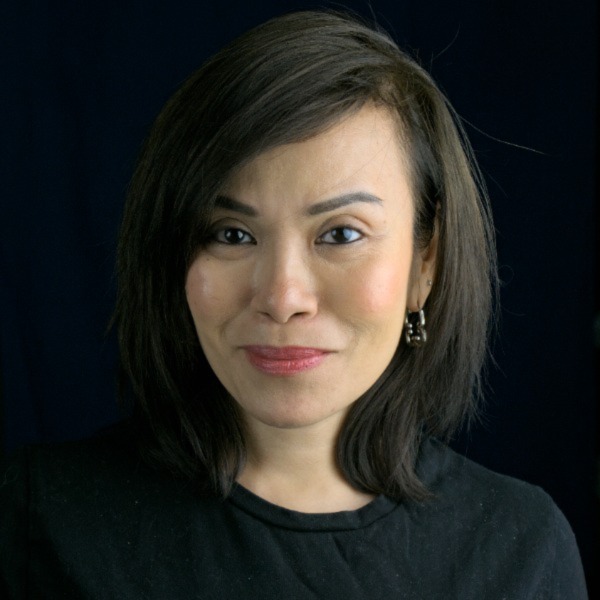
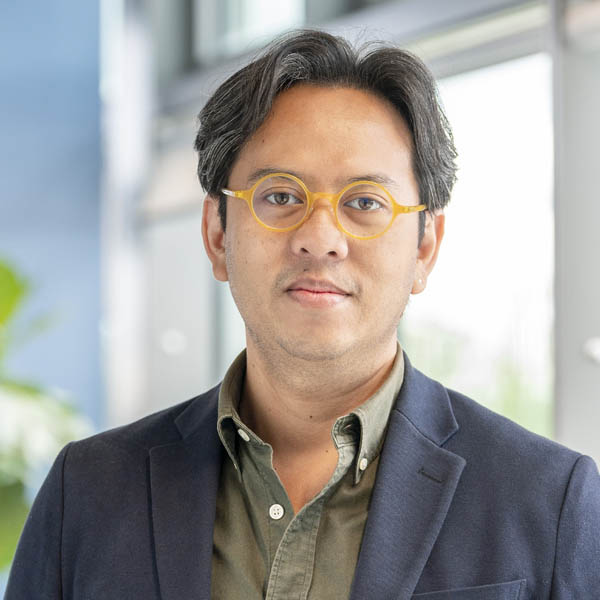
Atlantic Fellow for Health Equity, Adrian Billings was awarded $50,000 by the American Medical Association as part of the Community Health Impact Lab Micro Grants Program for his shared Medicine on the Move initiative with the TTUHSC Institute of Telehealth and Digital Innovation. The initiative is working to improve diabetes testing access in rural West Texas and this new funding will lead to more hemoglobin A1C testing availability in rural communities.
Atlantic Fellow for Social and Economic Equity, Johnny Miller launched his book “Unequal Scenes” alongside his joint exhibition “Unequal Scenes & Salt Works” at the Amerikahaus in Munich, Germany in October. The book features aerial drone photographs that reveal how social and economic inequality is inscribed into cities and landscapes through boundaries, transitions and divisions. It was published by Buchkunst Berlin and is now available to order here.
Atlantic Fellow for Equity in Brain Health, Zach Bandler’s film “Koko Suzanne” was featured in NewFilmmakers Los Angeles's Seen in Full: Disabilities in Focus series. The short film is based on true events and follows a young girl as her life is turned upside down when her grandmother's strange behavior sparks fears of witchcraft. It aims to highlight the lack of awareness and deep stigma surrounding dementia and Alzheimer's disease in the Democratic Republic of Congo.
Atlantic Fellow for Racial Equity, Koketso Moeti and her initiative amandla.mobi will be spotlighted in an upcoming global docuseries produced by Kerry Washington, as highlighted by People Magazine. The series profiles leaders actively confronting democratic backsliding, civil liberty threats and growing polarization worldwide, dedicating individual episodes to distinct global challenges.
The Global Brain Health Institute, alongside the National Institute of Public Health (INSP), the National Commission for Mental Health and Addictions (CONASAMA) and the Morelos Center for the Arts launched Creative Brain Week Mexico 2026 in Cuernavaca, Morelos, Mexico this past October. The event focused on positioning culture and creativity not just as add-ons but as key determinants of brain health and community well-being. Founding director of GBHI at Trinity, Brian Lawlor and Atlantic Fellow for Equity in Brain Health and director of Creative Aging International, Dominic Campbell, were present at the event.
Atlantic Fellow for Health Equity in South Africa, Azeeza Rangunwala, co-wrote an op-ed in the Daily Maverick arguing that Africa’s energy transition and climate response must be anchored in public health and equity rather than fossil-fuel extraction. Read more here.
Atlantic Fellows for Social and Economic Equity, Crystal Simeoni, explored why African women must be at the heart of debt, tax and financial reform discussions in a recent article she wrote for the Arab News. Read the full op-ed here.
Atlantic Fellow for Health Equity in Southeast Asia, Ana P. Santos’ documentary, “Living in Water” was selected to be shown at two European film festivals: the 2026 Aesthetica Festival in York, UK and the DOK Neuland Film Festival in Leipzig, Germany. She will also be hosting a film screening and talkback at Rappler’s Social Good Summit 2026 at Shangri-La The Fort, Manila in the Phillipines, November.
Writing for The Star, Atlantic Fellows for Social and Economic Equity, Badrul Hisham Ismail, examines how historic ideas regarding public space, property, land and urban planning persist in shaping Kuala Lumpur—and asks what genuine urban decolonization entails. Read more here.
Atlantic Fellow for Equity in Brain Health, Dana Mashoian Walrath launched her book “The Book of Genocides” with Harvard Press in September. The book is a haunting graphic narrative that compels readers to confront the most harrowing chapters of human history not as distant events, but as visceral experiences. Copies are now available to order here.
Atlantic Fellow for Social and Economic Equity, Pedro Telles, was cited as the director of Democracy Hub (D-Hub) in an MSN article about anti-authoritarianism. D-Hub recently published a anti-authoritarian toolkit which draws on real cases from 30 countries to give tips on how to defeat new authoritarianism. Read more here.
Atlantic Fellow for Health Equity in Southeast Asia, Tharani Loganathan co-wrote an article published in The Edge Malaysia Weekly about private healthcare expansion in Malaysia. In the article, they argued that as state entities invest heavily in private healthcare, the priority must move beyond simple expansion to focus on transparency, accountability, and sustainable system growth.
Atlantic Fellow for Equity in Brain Health, Agustin Ibanez, co-authored two cornerstone papers in a new collection that outlines a roadmap for integrating the arts into health and well-being systems globally. The framework covers population health, prevention, community pathways and clinical care. The collection launched in New York during the Healing Arts at UNGA 2026 event, held alongside the United Nations General Assembly, where Agustin was a featured speaker.
In other news, Agustin was also the senior author of a recent large cognitive health study published in Science Advances that links speech patterns with brain aging.
Atlantic Fellow for Health Equity, Bram Wispelwey, and co-authors recently published a policy brief on health sciences and genocide prevention in Gaza and beyond. The brief highlights the critical role health scientists play in providing the evidence needed to investigate, punish and prevent genocide. Read the full brief here.
Atlantic Fellow for Social and Economic Equity, Elimane Haby Kane, and his think-tank Legs Africa, are calling for the immediate publication of a debt management plan in Senegal, as appeared on Radio France Internationale. Kane urged the state to ensure that measures are taken to restore the country’s financial health and do not end up impoverishing Senegalese citizens. Read more here.
Atlantic Fellow for Social Equity, Te Kahuratau Moko-Painting was profiled in the University of Auckland’s newspaper for his research on global Indigenous astronomy. This year, he graduated with two masters degrees (one in marine conservation and another in social change leadership) and is starting his PhD in Indigenous Knowledge through the Burunh Program for Cultural and Indigenous Astronomy in the School of Physics at the University of Melbourne. Read his full profile here.
Atlantic Fellow for Equity in Brain Health, Michelle Memran’s documentary “The Rest I Make Up” was featured in a series called “Documentary Mondays” at the Czech Centre in Bucharest. Find out more here.
Research by Atlantic Fellow for Social and Economic Equity, Hillary Vipond, was featured in a recent Financial Times article examining the effects of mechanisation on Britain’s bootmaking industry and what it can tell us about technological change and employment. Read the full article here.
Atlantic Fellow for Racial Equity Nazeer Sonday wrote an op-ed in the Daily Maverick on why Africa’s agricultural crisis is a matter of race, class and epistemicide. Read more here.
Atlantic Fellow for Social and Economic Equity, Jane Sloane, wrote an article for Alliance Magazine arguing that tackling the anti-rights agenda requires distinguishing between the strategic groups funding and organizing these campaigns and the broader public they attempt to sway. Read the full article here.
Atlantic Fellow for Racial Equity, Axolile Notywala, was featured in an MSN article as a co-founder of the Movement for Collective Action and Racial Equity (Movement for CARE), an organization that helped lead the Heritage Day protest on the Sea Point Promenade against the City of Cape Town's R114-million N2 wall project. Read more here.
The Global Brain Health Institute worked with local researchers in Cuba to complete a cluster-randomized trial aimed at helping family doctors recognize dementia earlier, according to an article published in the National News. As a result of this initiative, diagnosis rates in the participating clinics rose significantly over a 12-month period.
Founding faculty member of the Global Brain Health Institute, Kristine Yaffe, received the 2026 Rhoda and Bernard Sarnat International Prize in Mental Health for her pioneering research on cognitive aging and dementia prevention.
Chuck Feeney, the founder of the Atlantic Philanthropies, is featured in a new video profile by Newsthink detailing his rejection of the billionaire lifestyle and his mission to give away his entire fortune during his lifetime. Watch the video here.
Atlantic Fellow for Equity in Brain Health, Bárbara Costa Beber, was quoted in article published in the Folha de S.Paulo discussing the cognitive impacts of reduced daily speaking and face-to-face conversations.
Atlantic Fellow for Health Equity Global, Gloria Aguirre’s work titled “El Bosque de las Luciérnagas Mágicas / The Forest of Magical Fireflies” was featured alongside other art installations in the Davies Symphony Hall lobby for Annual Día de los Muertos Celebration in San Francisco. Her large-scale installation is made up of glowing fireflies that illuminate the dark interior and symbolize the enduring spirit of lost loved ones and the memories that continue to brighten life.
The Hidden Genius Project, an initiative run by Atlantic Fellow for Racial Equity, Brandon Nicholson, was featured in KTVU Fox 2, as they celebrated Oakland, California students completing their 15-month intensive immersion program where students developed skills in coding, technology, artificial intelligence, entrepreneurship and leadership.
Atlantic Fellow for Equity in Brain Health, Urszula Skrobas, was interviewed by Medonet in honor of World Alzheimer’s Day. In the interview, Urszula discusses early-onset Alzheimer’s disease (EOAD touching on its definition, misconceptions and early symptoms.
Atlantic Fellow for Social Equity, Damein Bell, was quoted by ABC News Australia in an article on declining wetlands and vulnerability of the brolga population, highlighting the ecological and cultural significance of the birds.
Atlantic Fellow for Equity in Brain Health, Phaedra Bell; founding director of the Global Brain Health Institute, Bruce Miller; and site director at GBHI-Trinity, Brian Lawlor, co-wrote a perspective published in Frontiers in Dementia on how intergenerational friendship could help prevent dementia, loneliness and depression among older adults.
Atlantic Fellow for Health Equity in Southeast Asia, Kotchakorn Voraakhom, was recently quoted in a CNA report on Bangkok's severe flooding. As a landscape architect and CEO of Porous City Network, Kotchakorn argues that the city relies on an outdated mindset regarding water management and urges urban planners to adapt to evolving climate realities rather than fight them. Read the full article here.
At the 10th-anniversary celebration of Cape Town's Isivivana Centre, former Atlantic Philanthropies president and CEO Chris Oechsli reflected on the social justice hub's journey. The Atlantic Philanthropies helped bring the multi-purpose space to life by funding its initial land purchase and construction, along with establishing an endowment for its long-term maintenance.
Former Atlantic Institute Governing Board member and inaugural chair of the Global Brain Health Institute of Trinity College and UCSF, Veronica Campbell was listed as one of the 30 remarkable women in STEM to watch in Ireland.