

As the Oxford countryside slipped past my window on the train back to London, I found myself returning to questions I had not expected to bring home with me.
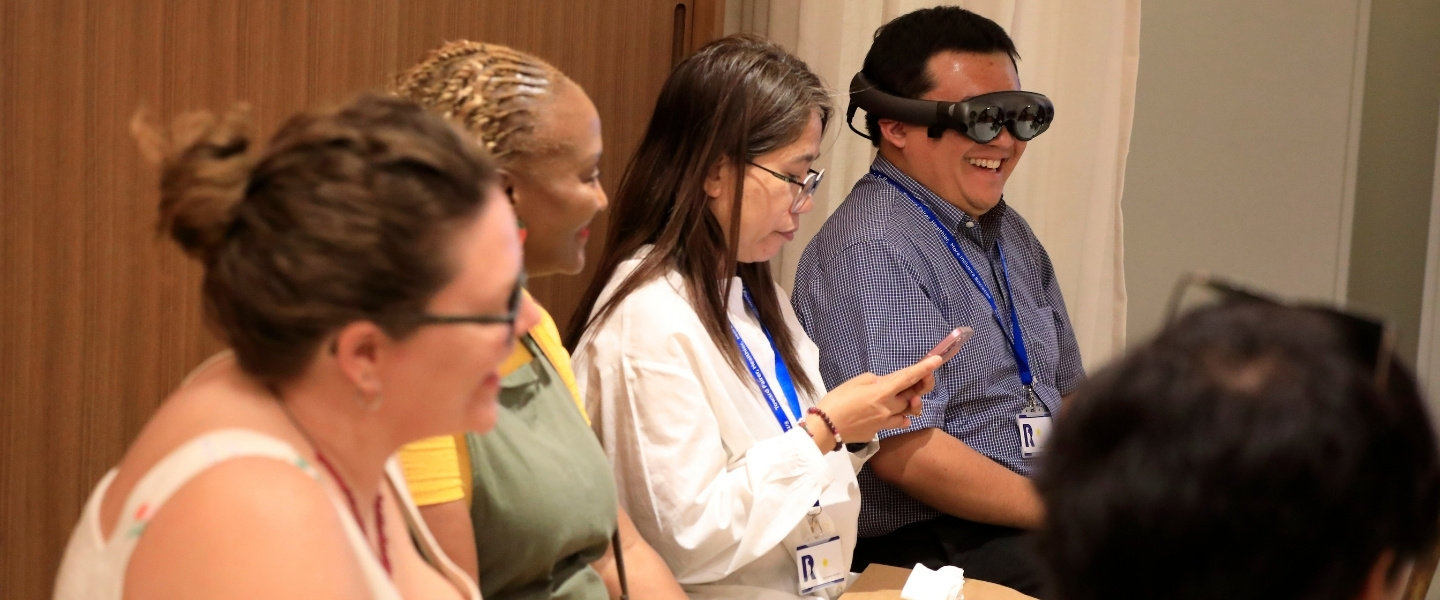
I had spent the week in Oxford for the 2026 Atlantic Fellows Emerging Technologies Residency, a program exploring how immersive and emerging technologies relate to climate justice. Over the course of the week, we engaged with virtual and augmented reality, immersive art, data and the future of spatial computing, while reflecting on how these tools could be applied to real-world challenges.
I arrived expecting to learn about emerging technologies. And I did. I put on headsets, experimented with unfamiliar tools, stepped into virtual spaces and encountered experiences that were exciting, strange, occasionally uncomfortable and sometimes genuinely beautiful.
But somewhere during the week, I realized that the residency was not really about mastering the technology. It was about learning how to think differently about it. And, perhaps more importantly, about asking better questions.
At a moment when technological capability is advancing so quickly, having spaces where we can examine technology through equity, rather than treating equity as an afterthought, feels both necessary and surprisingly rare.
Of all the ideas I am taking home, one of the most important may also be the simplest: technology should adapt to the work we are trying to do, not the other way around.
There is an understandable tendency when we encounter a new technology to begin with the tool.
We have Artificial Intelligence. Where can we use it?
We have virtual reality. What can we build with it?
We have a new platform. How can we integrate it?
But the Atlantic Institute residency reminded me that perhaps we should reverse the order. Start with the human.
What are we trying to change? Who are we trying to reach? What do we want someone to understand, experience or do differently? Whose perspective is missing? Who benefits, and who might be left behind? Only then should we ask whether technology has a role to play.
This is also where the Atlantic Institute offers something quite unusual. The Atlantic Institute sits at the heart of a global community of Atlantic Fellows working across different disciplines, geographies and forms of inequity. That means emerging technology enters a space where the starting question is not simply what is technologically possible, but what does a more equitable future require? There are many places where one can learn about emerging technology. There are fewer places where one can learn about technology explicitly through an equity lens. That distinction mattered to me.
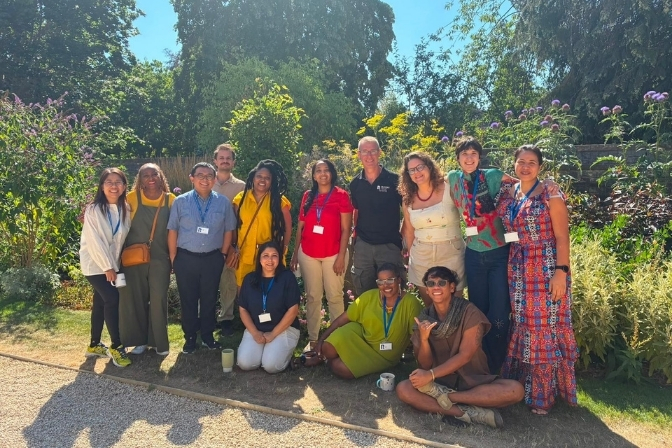
Throughout the residency, we were not only learning what these technologies could do — we were encouraged to think about who they serve, whose realities and knowledge are represented in them, who has access to them and which existing inequalities they might challenge or inadvertently reproduce.
In other words, equity was not something added at the end of a conversation about technology. It was part of the lens through which we encountered the technology in the first place, which felt particularly important.
My own fellowship journey through the Equity Initiative has taught me to look beyond the immediate or technical dimensions of a problem and ask what structures, systems and distributions of power sit underneath it. Bringing that same lens to emerging technologies changed the conversation.
The question becomes not simply, “Is this innovative?” It becomes, “Innovative for whom?”
Not simply, “Does it work?” but, “Who does it work for, and who might it leave out?”
And not only, “Can we build it?” but, “What human purpose are we asking it to serve?”
This is ultimately what designing technology around humanity means to me.
I arrived in Oxford wanting to learn about emerging technologies. I left thinking about emerging possibilities.
Technology is not developed or deployed in a vacuum. Decisions are made about which problems deserve attention, what data is collected, what gets optimised, whose knowledge counts and whose experiences become visible or invisible. The most sophisticated technology is therefore not necessarily the most useful one. Sometimes a simple tool may be enough. Sometimes technology needs to be redesigned around the people it is intended to serve. And sometimes the right answer may be not to use technology at all.
That may sound obvious. Yet at a moment when technological capability is advancing so quickly, having spaces where we can examine technology through equity, rather than treating equity as an afterthought, feels both necessary and surprisingly rare.
Perhaps one of the biggest questions that I came away asking was, “What if scale is not always the point?”
Working in international development, I am accustomed to thinking about scale. How many people can we reach? Can something be replicated? Can an intervention move from a pilot to a program, from one community to several countries, from thousands of people to millions?
There are good reasons for thinking this way. When the challenges we work on affect millions of people, scale matters enormously. But the residency challenged me to think about whether we sometimes confuse scale with impact.
It was my experience with extended reality, or XR, that made this question particularly tangible.
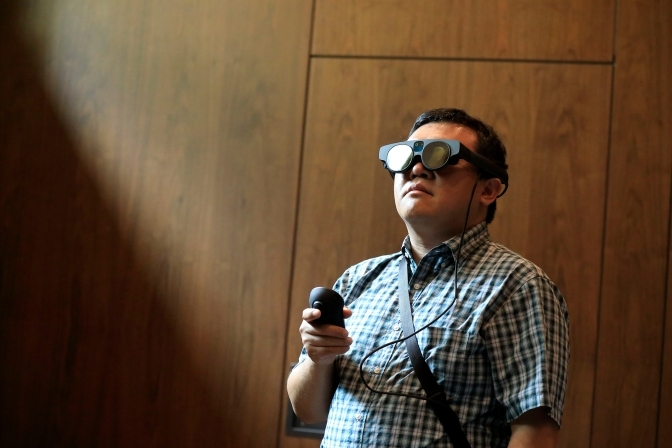
Standing inside an immersive experience feels fundamentally different from reading about something on a page or seeing it presented on a screen. Space, sound, movement and perspective become part of the experience. At some point, I stopped thinking about XR simply as technology and started thinking about it as art.
We do not judge a painting by how many people have seen it. We value it because it has the power to move someone, shift a perspective or make an experience impossible to ignore.
Perhaps we should sometimes think about technology in the same way.
An immersive experience that changes how even a handful of policymakers understand inequality may ultimately matter more than an application downloaded by millions and forgotten the next day.
This does not mean scale is unimportant. It means that reach and impact are not necessarily the same thing. Some of the changes that matter most are difficult to count: a perspective reconsidered, an assumption challenged, a conversation started, a decision made differently.
That was a surprisingly important realization for me.
What are we trying to change, and could technology help us do that better?
That is the question I want to carry forward.
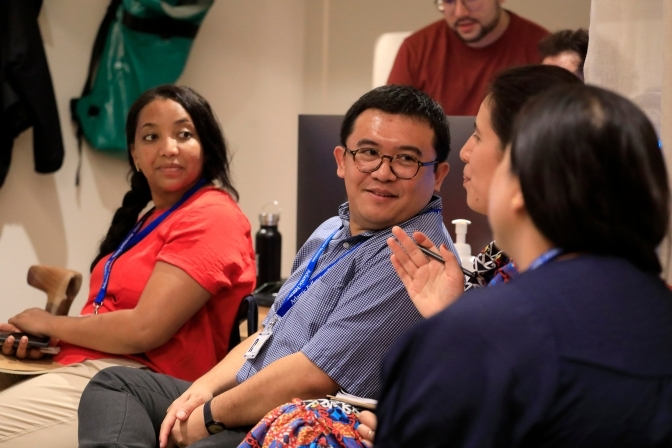
I arrived in Oxford wanting to learn about emerging technologies. I left thinking about emerging possibilities.
And as the countryside disappeared and London came into view, one thought stayed with me: the future will undoubtedly belong partly to those who build technology. But it must also belong to those who question it, who ask whom it serves, who imagine different possibilities for it, and who insist that its purpose remains grounded in humanity.
Because perhaps the most important question about the future of technology is not how far it can scale. It is, “What kind of future do we want it to help us build?”
About the author
Angga Dwi Martha is an Atlantic Fellow for Health Equity in Southeast Asia through the Equity Initiative. As a partnerships specialist at Intergovernmental Affairs, UNICEF, he coordinates UNICEF’s intergovernmental affairs and strategic engagement, including political negotiations at the U.N. General Assembly, High-level Political Forum, G20 and with countries in special situations like LLDCs, LDCs and SIDS.
This article is a personal reflection written in Angga's capacity as an Atlantic Fellow. The views expressed are his own and do not necessarily reflect the views or positions of any organisation with which he is professionally affiliated.



.png)

