
The Atlantic Institute exists to amplify the influence and impact of the Atlantic Fellows. This annual review looks back on 2023 to 2024, a year of convenings, partnerships, research and grants that brought a global community of nearly 1,000 Fellows together across more than 80 countries to advance fairer, healthier, more inclusive societies.


Atlantic Fellows are a diverse, international community of leaders who share a deep commitment to advancing fairer, healthier, more inclusive societies. They are courageous, compassionate, and collaborative thinkers and doers who collectively seek to bring lasting improvements to their communities and the world. Their diversity enables them to look at the causes of systemic problems from multiple perspectives to more effectively address the root causes rather than the symptoms.
The Atlantic Fellows programs bring together passionate, experienced individuals from different backgrounds, areas of expertise, and professions to learn from one another and collaborate to advance solutions to pressing problems. Cohorts across programs include advocates, lawyers, artists, business professionals, health practitioners, government officials, academics and researchers. The programs are designed to increase Fellows' understanding, capacity, and commitment, and help them access the resources and networks that they need to accelerate their work and achieve demonstrable impact.
Each of the programs is unique and grounded in its local context but united through a shared Atlantic Fellows identity and the shared principles, objectives, experience, values and attributes it represents. The Atlantic Institute amplifies the influence and impact of the Atlantic Fellows network with long-term resources and opportunities to connect, learn and work together.
The Atlantic Philanthropies established the Atlantic Fellows to culminate the foundation's work in the geographies and themes in which it historically focused, and its long history of investing in people and their vision and ability to realize a better world. Atlantic's final, and largest, investment, made alongside other partner organizations and governments, aims to support the work of a global community of thousands of Atlantic Fellows over the next two decades, and beyond.

It is difficult to be an optimist when violence continues to tear the world apart and we are experiencing so many unprecedented humanitarian, environmental and social catastrophes. It is tempting to throw up our hands and despair, but there has never been a more important time to renew our efforts for fresh thinking and action.
Atlantic Fellows, a global community of change-makers from different countries, disciplines and experiences, are exceptional leaders united in their pursuit of equity. Systemic exclusion, marginalization and inequality are not inevitable. Change happens when enough leaders with a proven track record in advancing racial, social and health equity, join forces and work together. Already, there are nearly 1,000 Fellows in the growing Atlantic Fellows community, who are finding solutions that address underlying systemic inequities.
Navigating a polarized world is difficult, particularly when the chasm between the haves and have-nots is wider than ever. Finding spaces to listen respectfully to voices representing diverse perspectives and worldviews, and bridging cultures and knowledge systems, is critical. This community was set up for equity leaders to learn together, deepen understanding across sectors, geographies and perspectives, and tackle injustice.
It is a great honor to serve as the new executive director of the Atlantic Institute. Due to the efforts of the Institute team and my predecessor, Evie O'Brien, there is much to celebrate in what was achieved in the past year. The Institute piloted a regional strategy for the first time, in Africa. At a convening in Brazil, Fellows who are activists, policymakers and government officials brainstormed on tools and levers for driving sustainable change. The annual Creative Brain Week in Ireland grows in size and scale each year. Guided by Institute staff, Fellows have learned to harness immersive technologies for powerful storytelling that deepens empathy and shifts exclusive, dominant narratives.
I thank the staff from across the seven Atlantic Fellows programs and the Rhodes Trust for their sustained support as we look forward to the next phase of the Institute's work.
In solidarity,

This past year, the Atlantic Institute realized the culmination of a start-up and learning phase, personified in the completion of Evie O'Brien's term as its executive director. The Atlantic Institute Governing Board (AIGB) is excited to welcome Evie's successor, Lysa John, as we expand on the Institute's experience and chart our next phase.
Tragic events in Israel and Gaza have made us more acutely aware of destructive inequitable legacies. We also recognize that these damaging legacies and conflicts exist in some form in all societies in which our nearly 1,000 Fellows reside, often with less media attention, and in subtle but destructive ways. In recognition of our global, diverse Fellows, we cannot lose sight of the complex nature of these varied legacies, and the skills, resilience and values it takes to effect meaningful, constructive change.
In the coming months, Lysa and the AIGB, in consultation with the Global Atlantic Fellows Advisory Board (GFAB), the Atlantic Fellows programs' executive directors and representatives from their governing bodies, will assess how best to deploy the Atlantic Institute's limited resources to advance our mission. Beginning in January 2025, our new AIGB Chair, Nicolette Naylor, will accompany Lysa and the Atlantic Fellows community to advance that work.
With gratitude,


More than 2,000 people participated in an Atlantic Institute event over the year, both virtually and in person, a majority of them Fellows. The numbers refer to participations, not unique participants.
Global Leadership Summit; XR Residency (2); Brain Health Perspectives, Africa; The Right to be Human; Creative Brain Week and satellite events (5); Amplifying Black Womyn's Voices; Africa Regional Initiative; The Catalyst's Way; Re-membering through Narratives.
Grant writing workshops (2); Conflict Transformation Futures; Introduction to Kiswahili; Building Better Boards (2); Podcasting for Social Change; Peer mentoring programs (2); a webinar on Decolonization in Southeast Asia; community-building informational webinars (2); launch of the Atlantic Fellows Food Sovereignty Network; community calls with African Atlantic Fellows (4).
Virtual All Staff Town Halls (2); All Staff Retreat in Viet Nam.
Storytelling for Social Change; Connecting Networks; Skoll World Forum Reception, Workshop and Fellowships Event; Rhodes Trust Partner Programs Ideas Gallery and Dinner; Fellowship of Fellowships Inaugural Gathering.
A total of grants were awarded (861,467 pounds), with Atlantic Fellows receiving Collective Impact Fund grants (Connect, Pilot and Scale Grants) and Solidarity Grants.


We continued to examine how we strengthen the sense of community and belonging; support collective and collaborative leadership; and lift Fellows' work exploring (k)new solutions.
The global Atlantic community is where changemakers can find solace and solidarity with others. In the last year, Atlantic Fellows established more groups around shared interests, discussing equity-related topics that included reparations, genocide, accountability, conflict and war. Our activities deepened their understanding of belonging along dimensions of race, religion, wealth, nationality, disability, gender and sexual orientation.
At the 2023 Global Atlantic Fellows Annual Convening in Rhodes House, Oxford, Fellows engaged in panels on the British Empire's legacies, poetry, music, dance, creative workshops and courageous conversations about transforming the future.
Our thematic convenings are centered on topics chosen by Fellows. This year, themes included changing the narrative, harnessing the collective power of Black female leaders, brain health, policy and politics, and driving transformation in Africa.
In September 2023, this event explored how history shapes our identities and ways of freeing solutions. It was led by and based on the work of two Fellows, Dana Walrath and Durkhanai Ayubi.
In October 2023, an event convened by The Rainbow (LGBTQI) group met with other Fellows and Rhodes Scholars to explore ways to improve LGBTQ rights globally. Atlantic Fellow Kanyisa Booi said the event ignited a collective drive for change.
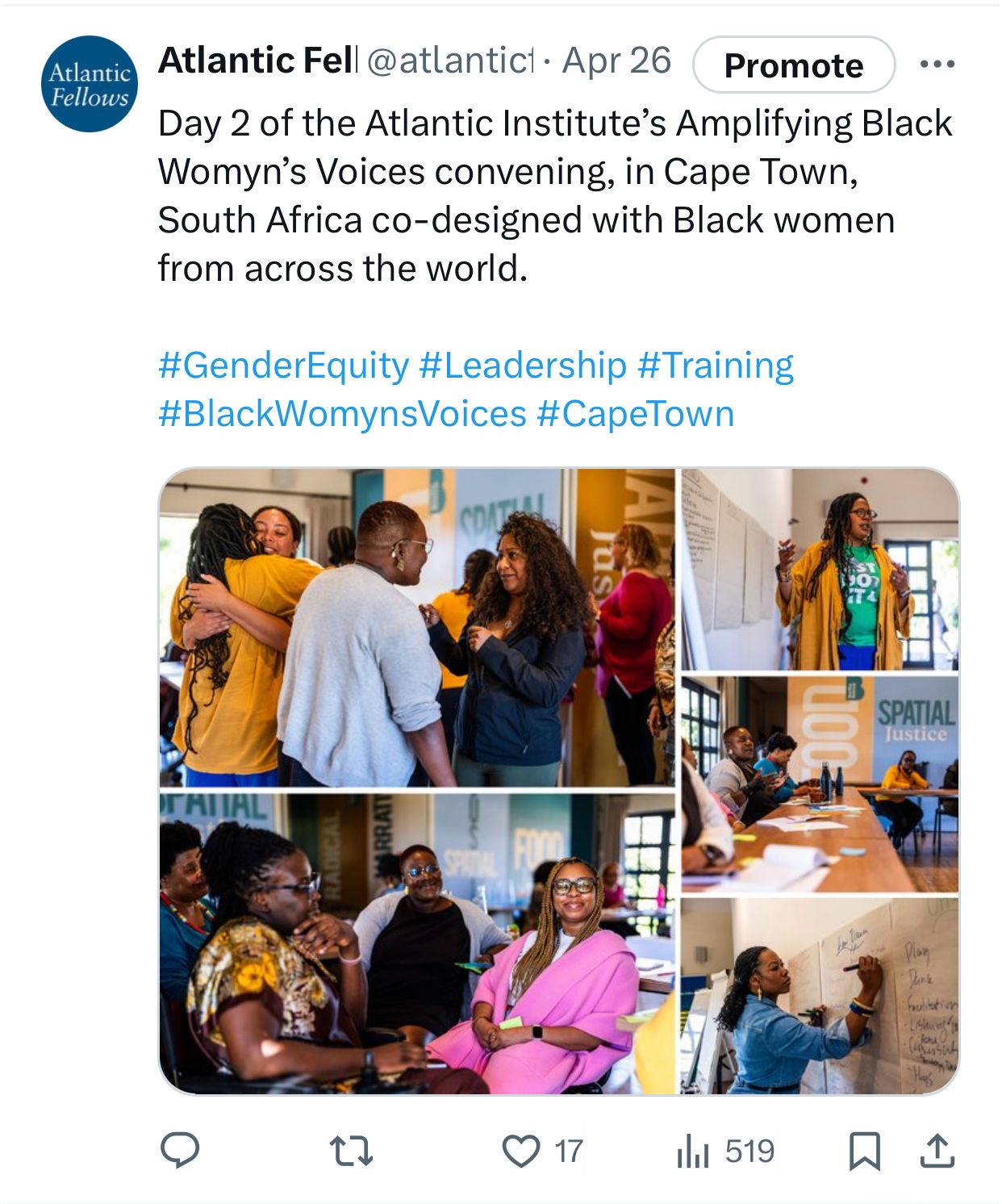
In April 2024, this convening brought together Black womyn leaders to talk about successes and challenges in breaking the glass ceiling and how they might work better together to achieve greater impact.
While most Atlantic Institute activities focus on a global lens, this year we piloted a regional approach. The first Africa Regional Initiative convening brought together 50 Fellows, partners and academics.
As part of the African Regional Initiative, the Institute co-hosted The Brain Health Perspectives convening with Fellows and helped organize TEDx talks on brain health.
Our approach to leadership focuses on collective action and ideals of collective and collaborative leadership. Atlantic Fellows from different backgrounds examined how policy and politics drive social change.
Hosted annually by the Global Brain Health Institute at Trinity College Dublin, this scaled-up event ran for the third consecutive year. For the first time, the Atlantic Institute also supported satellite events in Egypt, Botswana, India and Australia.
Fellows received Collective Impact Fund grants for travel and community projects. In December 2023, 19 Fellows used a Connect Grant to attend COP28 in Dubai. They later formed the Climate Justice Community of Practice. In March 2024, the Atlantic Institute paused its grant-making to design a new suite of offerings for the coming year.


The Atlantic Fellows Hub is the beating heart of our community online. This web portal is where Fellows and program staff from across all seven programs identify others with shared interests, find contact details, share news and content, register for events, and set up or join community groups. In the past year, program staff and Fellows created 283 posts on the Hub. This year we instituted a labeling system within profiles, making it easier to find and connect with others according to areas of expertise and professional experience.
Some 950 users activated their accounts on the Hub, an increase of over 100 users compared with the previous period. In the past year, 82% of registered users accessed the website at least five times and 39% accessed it more than 50 times, compared with 83% and 32% respectively in the previous period.
Throughout the year, we offered sponsorship to Fellows and program staff for virtual week-long courses on leadership delivered by the Rockwood Leadership Institute. Nicholas Grant, Atlantic Fellow for Health Equity U.S. + Global, a clinical psychologist, said the Rockwood course provided a safe space for critical reflection on leadership.
Our continued partnership with the educational think tank Metafuture gave Atlantic Fellows and staff more opportunities to participate in online webinars on futurism. This year, Fellows explored alternative futures for resolving conflicts; some, like Tshepo Mokhadi, Atlantic Fellow for Health Equity in South Africa, progressed further to gain accreditation.
Two online workshops, Building Better Boards, surfaced valuable lessons on the importance of governance structure and processes. The Institute also co-hosted a webinar, Decolonization in Southeast Asia: Perspectives and Futures, with The Equity Initiative.
Alongside our grant support this year, we also offered virtual workshops on grant writing so Fellows can be more effective in seeking external funding.
Since 2020, through the New Zealand Coaching and Mentoring Centre, we have sponsored coaching sessions for Fellows and program staff in a virtual peer-to-peer mentoring program. In the past year, 28 Fellows and one staff member completed one of the two coaching sessions, with five participants then choosing to form their peer group Siyakha, which translates as to build in the South African language isiXhosa.


Last year saw the official opening of the XR Lab in Rhodes House. The Atlantic Institute is a provider of tools and a network to shift hearts and minds and one way of doing this is through our focus on XR (Extended Realities).
We hosted two residencies in Oxford for Atlantic Fellows during October 2023 and March 2024. Both weeklong workshops focused on the critical components of successful XR storytelling to change the narrative. Fellows learned from expert speakers and through the showcasing of innovative storytelling experiences.
In October 2023, Atlantic Fellows Mildred Omino and Dela Wilson were invited to speak about their learning experience with their talk, Community-developed Augmented Reality, at the Grace Hopper Celebration, the world's largest technology conference for women and non-binary people, run by AnitaB.org.
Newly graduated Fellows were introduced to the technology and experience of GAWI, a VR film co-created by Fellow Myriam Hernandez with the Raramuri people from northern Mexico. The film project received support from the Atlantic Institute and the Atlantic Fellows for Social and Economic Equity program. In a panel session, Isabelle Monarca Cruz and Lorenzo Moreno Pajarito from the Raramuri joined Myriam to discuss the filmmaking project, with Atlantic Fellow Nasser Eledroos and XR Lead Alice Wroe.
At a presentation by Alice Wroe, 100 staff members learned about the future of online worlds and the concept and potential of XR technologies.
In Nairobi in May 2024, XR was integrated as a central activity over four days, with an introduction to the XR Lab and the screening of Noah's Raft, a VR documentary by Kachi Benson, the first African to win an XR Cannes Award. A panel, Africa's Future Transformed? The Rise of Emerging Technologies, featured Judith Okonkwo, Kachi Benson, Dr. Rendani Mamphiswana and Atlantic Fellow Fola Adeleke, with moderator Deepa Mann-Kler.
Dela Wilson is using economic projections, cultural studies and imagination to visualize how policies for reparations may materialize. Dana Walrath and Dylan Valley are co-creating a VR film that unites all genocides across space and time. Adekemi Adeniyan is adapting her book into an interactive VR film to educate underserved populations on oral health.

Around 100 staff from across the seven programs and the Atlantic Institute attended the All Program Staff Retreat, which ran Feb. 27 to March 1. We gathered in Da Nang, a city close to the heart of the late philanthropist and founder of The Atlantic Philanthropies, Chuck Feeney. Da Nang received some of Atlantic's first investments in Viet Nam, with the country being awarded a total of $382 million in grants to improve public health, and revitalize libraries and universities.
This was the first global gathering for staff in around five years, so the theme of the Retreat was Flourishing Together: Recharging, Renewing and Rebuilding. A cross-program design team of staff co-created connection and learning spaces to encourage knowledge exchange and discussion.
Alongside the peer mentoring program offered to staff and Fellows, we held regular virtual Community of Practice meetings for staff working in similar roles across the Atlantic community. In the past year, we organized two virtual All Program Town Halls, rotating the hosting duties among the program executive directors.
As a connector and catalyst, the Institute arranged staff exchanges. Staff based in San Francisco, London, or Washington D.C. might shadow their peers in Melbourne or Bangkok to observe how things were done. Niall Kavanagh, a communications officer from the Global Brain Health Institute in San Francisco, was hosted by the Atlantic Fellows for Social Equity, a program focused on Indigenous-led change.
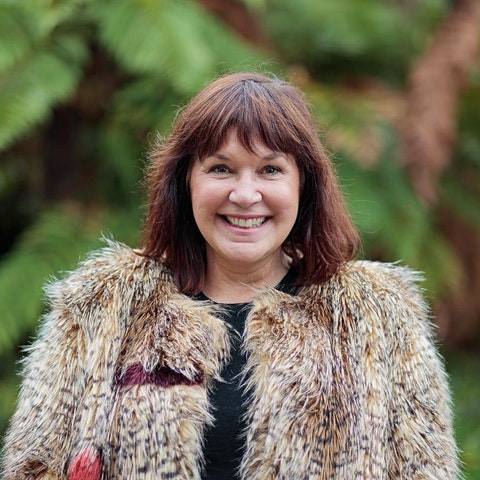


We appointed leaders-in-residence and scholars-in-residence as intellectual leaders and cultural advisers who guide and anchor particular projects of interest to the community. In the last year, they focused on three topics: leadership, pedagogy and values.
Leader-in-residence Chellie Spiller created The Catalyst's Way, which uses Atlantic Fellows' stories to empower changemakers, providing them with tools to be more effective. Chellie delivered a trainer-to-trainer workshop to over 100 Fellows in July 2023.
Leader-in-residence and Atlantic Fellow Wilneida Negron interviewed 85 Atlantic Fellows for her report, Being/Seen. It examined how leaders navigate complexity and included a pressure-point mapping framework.
Leader-in-residence Julie McLeod focused on the unique pedagogical approaches of the Atlantic Fellows programs, observing how they are upending traditional ways of teaching and learning. She is due to publish her research in late 2024.
Scholar-in-residence Max Price interviewed Fellows and staff and used his personal experiences as a leader in academic institutions. He led a workshop on ethical decision-making at the Atlantic Fellows Program Staff Retreat in Viet Nam. His book Statutes and Storms: Leading Through Change was published in 2023.
Scholar-in-residence Bruce Miller invited members of the Atlantic community to contribute to a special edition journal, The Neurobiology of Values, which has attracted around 40,000 views.


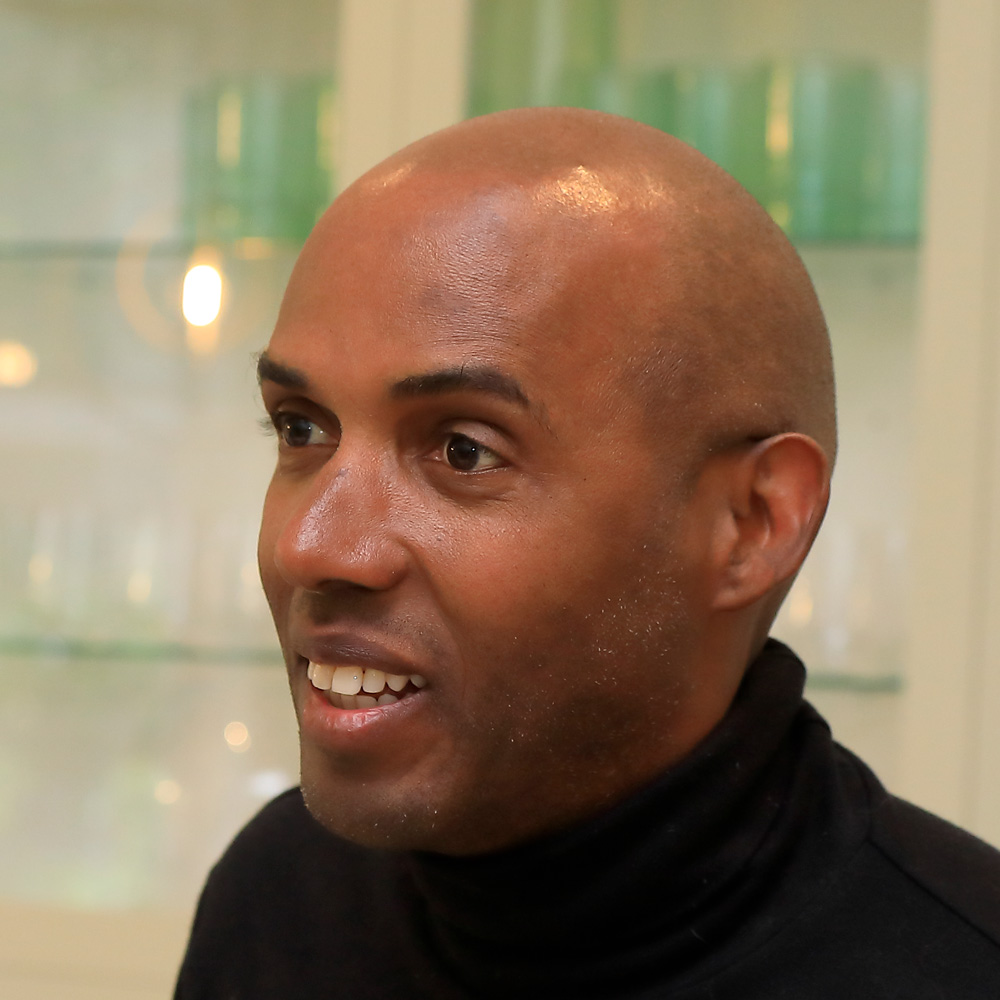
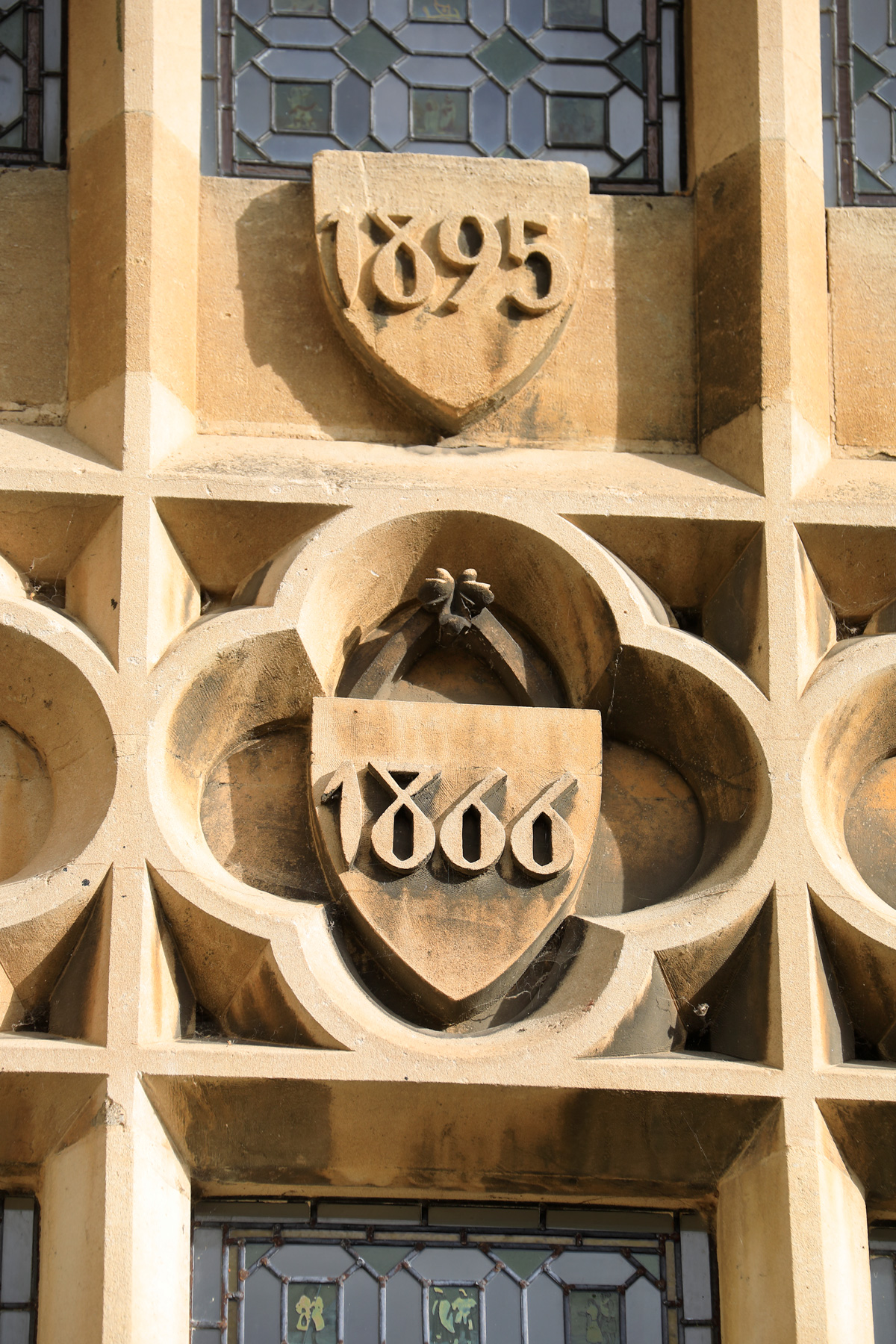
In renovating the house, we worked with the interior designer, Emma Anderson, to ensure that the improvements were sympathetic to the Victorian Gothic architecture and also, most importantly, that the soft furnishings and artwork reflected a global community. We want Atlantic Fellows and other visitors to see themselves in the home.
The kitchen has light fittings designed and manufactured in South Africa, juxtaposed against the limestone and leadlight windows. There are also soft furnishings from an African designer based in the U.K., including the award-winning Nigerian designer, Eva Sonaike. Most of the artwork and photography in the house has been donated by members of the Atlantic community and includes paintings from Argentina, Africa and Southeast Asia, and Indigenous pieces from Australia and New Zealand.
Located at 3 Norham Gardens and backing onto the University Parks, Kopanong is a short walk from Rhodes House and Oxford University's colleges, institutes and schools. Since opening, the house has served as a base for several residencies delivered in partnership with colleagues from across the university and for many visiting Atlantic Fellows, program staff and board members.
Making change happen requires radical inclusion and Kopanong is a space in which we embrace diversity. Our vision is that it becomes an international hub, where relationships are formed over a simple meal in the garden or kitchen that might one day lead to long-lasting collaborations. Atlantic Fellow Rowena Richie, who stayed at Kopanong in March 2024, said she remained energized and inspired to build on her connections and experiences with the values of Kopanong: radical inclusion, embracing diversity, mutual assistance and respect, and equity and belonging.

Solidarity Grants were originally designed to provide targeted support and resources to Fellows to combat the impact of COVID-19 on vulnerable communities. Once the end of the pandemic was declared, we refined the parameters of the Solidarity Grant so Fellows could respond to other crises impacting their communities such as natural disasters, particularly severe climate change effects, war and displacement.
Our Collective Impact Fund was designed to support Fellows from at least two Atlantic Fellows programs to collaborate. In September 2023, after a refinement exercise, five Collective Impact Fund grants were merged into three: Connect, Pilot and Scale. Connect Grants were awarded to Fellows fostering activities aimed at building connections between Atlantic Fellows to explore solutions. Pilot Grants were awarded to Fellows to roll out and test a defined (k)new project idea and evaluate its feasibility. Scale Grants were awarded to support projects to be scaled up.
This year, we supported 30 projects with the Collective Impact Fund so Fellows could collaborate to address the root causes of inequity within their communities across a range of areas that included food security, disability justice, oral health, mental health and well-being, sexual and reproductive health and rights, storytelling and changing narratives.
This year, Fellows received 48 Accessibility Grants. The grants helped Fellows overcome potential barriers that might otherwise have stopped them from attending or participating in events hosted by the Atlantic Institute.


Our impact evaluation work is not extractive and is informed by a series of principles, multiple theoretical frameworks and approaches, including the globally recognized Kirkpatrick Model, transformative learning theory and Indigenous evaluation.
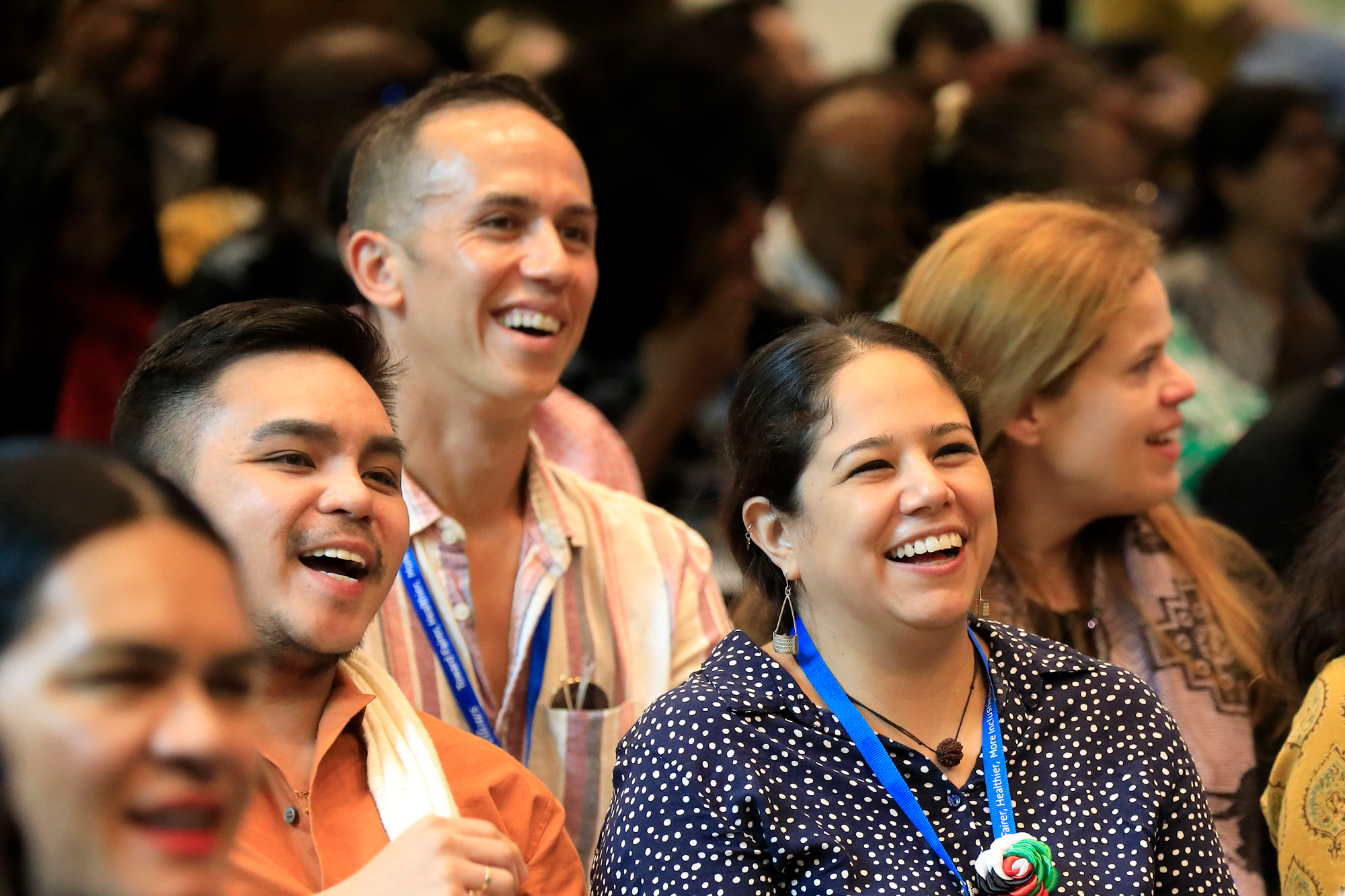
In 2023-24, we convened 1,000 people to facilitate learning and collaborative problem-solving for advancing equity. Some 800 Atlantic Fellows attended our events, with Rhodes Scholars also present at some of them. Many of our events were co-created with and in response to requests from Fellows and strategic partners, primarily the seven Atlantic Fellows programs.
We assess the impact of our convenings on building Fellows' capacity shortly after each convening to identify transformative learning outcomes, increased self-reflection, changes in Fellows' perspectives or world views, and greater self-awareness.
The Re-Membering Through Narratives workshop was held in Armenia, the ancestral home of one of the Fellows leading the course. Participants valued the personal link with Armenia and the place-based learning process. Thania Gopal, based in South Africa, explores the role of the media in influencing and developing more equitable health systems. Ivana Merckel, a community coordinator in South Africa, was interested in how the workshop scoped out context. Nasser Eledroos, in New York City, moves between legal and technical disciplines to effect policy change around criminal justice, artificial intelligence, race and power.
Ruby Hembrom amplifies the voices of the Adivasi, Indigenous people of India, through her nonprofit organization Adivaani. After attending Re-Membering Through Narratives, she said she is now more confident about telling their stories. Brenda Hughes, a community engagement manager in South Carolina, said the narratives workshop helped build solidarity with other Fellows. Laura Booi, a senior dementia researcher in Leeds and a member of the Global Atlantic Fellows Advisory Board, said it was another step in her learning journey.
Tracey Malawana from South Africa, founder of I-Menstruate, said the Global Leadership Summit in Brazil strengthened her sense of purpose and provided connections with organizations like MST. Nangamso Koza, a developmental strategist in South Africa, said the Summit provided new perspectives. Dela Wilson, based in Atlanta, said the convening Amplifying Black Womyn's Voices helped them connect and become more aware of their collective power.
Pham Thi Ngoc Bich, in Vietnam, attended the first Africa Regional Initiative, where Fellows agreed to work collectively on key areas, calling their plan the Nairobi Commitment. Prabha Shrestha, a professor of adult nursing in Nepal, said Creative Brain Week inspired new ideas in her work. Anne Laux, responsible for mental health wellness services for law enforcement officers in Ohio, intends to adopt learnings from Creative Brain Week. Marx Itabelo Lwabanya, medical director at Nundu Deaconess Hospital in the eastern Democratic Republic of the Congo, has put learnings from Creative Brain Week into practice at the hospital.




Between July 1, 2023 and June 30, 2024, the @AtlanticFellows YouTube page had 19,000 views with 1,100 viewing hours, compared with 4,000 views and 203 viewing hours for the same period the previous year. The number of subscribers increased by 158 compared with 44 the previous year, with a total of 441 subscribers by the end of June 2024. A film about the Atlantic Institute convening in New Zealand, Global Justice and Transformation, was the most watched of our videos in the last year, attracting 11,000 views.
All Atlantic Fellows podcasts are on SoundCloud. The total audience figure was 2,983 by the end of year, an increase of 392 listeners or 15% on the previous year. Walking the Talk for Dementia was the most listened-to podcast. A curated selection was added to YouTube in May 2024, making a total of 18,005 listens across platforms since our podcasts launched in 2018.
Our presence on social media including Instagram, Facebook, LinkedIn and X has reached a total of 14,168 followers, an increase of nearly one-third (31%) compared with a year ago. X and LinkedIn are our two most significant platforms, accounting for almost three-quarters (73%) of our followers. Over half of the growth is due to an increase in LinkedIn followers, where we gained more than 1,800 new users. We almost doubled our follower count on Instagram, increasing from 785 to 1,500. On average, 7.5% of our followers actively engage with our posts.
Internal newsletters to the Atlantic community over the last year had an average open rate of 66%. We send around eight newsletters yearly to the Atlantic Fellows community. The Atlantic community also received our twice-monthly events reminder, What's On.
Our main suite of publications, revised every year, includes The Global Atlantic Fellows Guide, The Global Community Book, and The Atlantic Institute Governing Board Handbook. Increasingly, we have moved to digital-only publications as Fellows and program staff have said this is their preferred format. The Global Community Book 2016-2024 provides over 1,000 short biographies of Atlantic Fellows and program staff, as well as the Atlantic Institute Governing Board members and the Atlantic Institute team.


As an important stakeholder in the Atlantic Fellows community and in line with the Atlantic Institute Charter, this body acts as an operational forum for giving advice and support to the Atlantic Institute Executive Director, associate executive directors and staff. It provides informed advice and feedback to the Institute on community engagement, programming and resourcing to Atlantic Fellows. Two members of the Global Atlantic Fellows Advisory Board (GFAB) also serve on the Atlantic Institute Governing Board.
Launched in 2021, the inaugural group of selected Fellows dedicated three years to supporting the Atlantic Institute during a particularly difficult period that included the COVID-19 pandemic. Formerly called the Global Atlantic Senior Fellows Advisory Forum, the inaugural board concluded its tenure in November 2023 to hand over to a new group of Fellows.
One of the main successes of the first group of Fellows was to lay the groundwork for successive boards. They identified areas of work for setting up their committees, working directly with staff to meet the Institute's programming and community-building goals. They were also on hand during the Global Atlantic Fellows Annual Convening in July 2023 to support Fellows. The inaugural board co-developed an in-person onboarding program at Rhodes House, Oxford, for their successors in February 2024.


In a spirit of collaboration, we are strengthening existing partnerships and networks of reciprocity and trust and building new ones. We foster global solidarity and shared humanity for a fairer, healthier and more inclusive world.
The Atlantic Institute is a partner program of the Rhodes Trust, based at the University of Oxford. We share our home at Rhodes House with the Mandela Rhodes Foundation, Schmidt Science Fellows, Rise and Oxford Next Horizons, enabling the easy flow of knowledge exchange between programs. This year saw the inaugural Partner Programmes Ideas Gallery and Dinner, which brought Atlantic Fellows together with Rhodes Scholars in Residence, Oxford Next Horizons Scholars, Schmidt Science Fellows and Rise Global Winners.
Beyond Rhodes House, we have relationships with some departments of the University of Oxford, providing Atlantic Fellows with access to the University's world-class knowledge, resources and networks. Among our strategic partners is the university's Africa Oxford Initiative (AFOX), with which we share resources and knowledge from across the continent and facilitate collaborations. Members of AFOX participated in the inaugural Africa Regional Initiative convening in Kenya. We continued to move forward on a project to produce a regular external publication with Oxford University Press.
This year, we were proud to collaborate with Oxford Community Action in mapping the city's equity ecosystem. While the Atlantic Fellows Residence: Kopanong is primarily a home-from-home for Fellows, it also serves as a resource for the local community. Our links with a social justice organization, Fusion Arts, resulted in hosting a group of Indonesian artists in Oxford to stage their climate justice exhibition.
We partnered with iac Berlin, an organization that supports the development of networks for social impact, in hosting a three-day event, Connecting Networks, at Rhodes House on Nov. 22-24. Attended by 40 participants, we explored how we can create resilient ecosystems that can react in an interconnected way to the multiple, overlapping crises of our time.
The Wasan Network is a global network of social impact and philanthropy practitioners focused on advancing relational approaches to social change. In April we hosted a side event at the 2024 Skoll World Forum in Oxford. To coincide with the Forum, the Atlantic Institute also brought together Atlantic Fellows, Obama Fellows, Aspen Innovators, Roddenberry Fellows and Ford Fellows at the Atlantic Fellows Residence: Kopanong.
Through a collaboration with the Ford Global Fellowship, we co-led an inaugural gathering in New York City for global fellowships leaders. It was attended by 30 staff from a diverse range of fellowship programs. We concluded that we should pursue a Fellowship of Fellowships for deeper connections and collaborations across our communities. If you are interested in collaborating with us, please reach out to the Atlantic Institute Partnerships Lead at Katherine.Bond@atlanticfellows.org.


From July 13-15, 169 Atlantic Fellows and 29 staff connected at Rhodes House, Oxford. Also attending were members of the Atlantic Institute Governing Board and former board and staff members from The Atlantic Philanthropies. Connection activities included Who We Are, in which groups of Fellows introduce themselves and their programs to the rest of the community. We also provided an introduction to Oxford through a spoken word poem from Rawz and guided tours.
We featured speakers from the Atlantic community as well as external guests to explore equity-related topics: Confronting History: How Britain Contributed to Global Inequality; (Un)doing Public Health: (K)new Approaches to Addressing Health Inequalities; XR as a Liberatory Tool: Community-developed VR to Dream Fairer Futures; Sustainable Economies; and Africa's Pathway to a Prosperous Future: Agenda 2063. In our survey, 82% of Fellows who attended agreed it had enabled them to forge new connections; 88% of respondents said they would be likely to try to collaborate with Fellows they had met at the convening.

The inaugural Atlantic Rainbow global convening, The Right to be Human, was in Mexico City, Oct. 18-25, 2023, and centered on uniting LGBTQI+ Atlantic Fellows to foster a stronger, interconnected community and spur catalytic collaborations, including with Rhodes Scholars.
This gathering provided a vital platform for Fellows to share experiences, exchange ideas and build lasting relationships. The key focus was on creating a supportive network to transcend geographical boundaries, enabling members to collectively address challenges faced by LGBTQI+ communities across the Atlantic community worldwide and beyond.
The program exhibited an exciting mix of cultural and educational activities, workshops and discussions that highlighted the importance of solidarity, mutual support and a shared vision. Topics raised ranged from human rights advocacy and social justice to mental health and community-building strategies.
The Right to be Human event has highlighted the power of collaboration in driving meaningful change and encouraged Atlantic Fellows to work together and with others as partners on projects that advance LGBTQI+ rights and well-being.


The American multinational technology company IBM reported in 2021 that one in three Black women who are senior executives said they felt less empowered and supported to overcome professional challenges than the general population. African-American women have described walking a tightrope in the managerial arena, maneuvering challenges that come with their sex and race as well as the stereotypes associated with these.
The convening, Amplifying Black Womyn's Voices, on April 24-29, in Cape Town, South Africa, was inspired by a group of Atlantic Fellows who wanted to establish a support network for Black womyn within the Atlantic community. There was broad support with 26 Fellows from five of the seven Atlantic Fellows programs attending. They included allies, advocates and activists from Kenya, Botswana, the United States and South Africa, who shared illuminating experiences and revealed their coping mechanisms and challenges. They talked about initiatives or tools that have worked for them as well as those that have not, and how they would work more together to amplify Black womyn's voices locally, regionally and globally.
These Fellows with lineages from across the globe came to Cape Town to grapple with our understanding of power, Blackness and redress. Joline Young, who took the Fellows on a walking tour of the city, highlighted how struggles for justice across the world are interconnected. The Fellows also engaged with representatives from local organizations that support Black womyn and queer people, including Faeza Meyer, Martha Qumba, Elsbeth Engelbrecht, Chaleen Arendse and Carmen Louw.
The convening helped the Fellows deepen their understanding of Black womyn's experiences in different contexts, and provided space for replenishment and connection. Together, they explored the power of narrative and storytelling for change and shared successful strategies for supporting Black womyn in leadership positions. Dr. Amara Enyia, Atlantic Institute Leader-in-Residence (2021-22), will support the group in mapping the next stage of their journey. They intend to develop a toolkit for Atlantic Fellows and others, to optimize their skills as effective leaders for equity.


Africa lags behind other parts of the world in achieving the UN sustainable development goals. Worsening inequality will result in extreme poverty becoming more entrenched on the continent. We recognize that the work of the organizations and constituencies with and for whom Fellows do their work is critical to the change agenda.
Two years ago, we first piloted the idea of the Africa hub with a focus group of Atlantic Fellows in Johannesburg. In the run-up to the convening scheduled for May 2024, the Atlantic Institute team met regularly with the Fellows to explore ways of working more closely across the programs and the continent. The Fellows shared their aspirations for transforming Africa and said they wanted solidarity, and clearly articulated objectives and goals for the region.
Fellows from six of the Atlantic Fellows programs attended the gathering and they came from far and wide: from ten African countries, Thailand, Vietnam, the United States and Brazil. Our partners from the Rhodes Trust, the University of Cape Town and AFOX also attended, and scholars from the region were invited to join us for dinner and conversation in Nairobi.
Leading thinkers and business leaders were invited to engage with the Fellows on policy developments in the region. Dr. Noncedo Vutula, Phyllis Wakiaga and Dr. Papa Demba Thiam spoke at the panel discussion, Regional Integration within the African Continental Free Trade Area (AfCFTA), which was chaired by Atlantic Fellow for Social and Economic Equity, Maureen Sigauke. At our Pilot Policy Lab, Fellows met with policy experts connected to our network to receive feedback on policy interventions.
Fellows also visited communities in Nairobi to learn about innovative initiatives, two of them led by Atlantic Fellows: a project at the Aga Khan University funded by an Atlantic Fellows program is helping bridge the gap in dementia research in East Africa; the Feminist for Peace Rights and Justice Centre supports young women activists who survived sexual violence; and the Toolkit Skills and Innovation Hub is improving resilience to climate change and boosting the employment of youth and women in agribusiness value chains.


The Brain Health Perspectives convening, co-hosted by the Atlantic Institute and the African Brain Health Network (ABHN), took place in Johannesburg in October 2023. The network, initially formed by Atlantic Fellows for Equity in Brain Health, steadily attracted Fellows from across the Atlantic Fellows community and has received significant support and resourcing from the Atlantic Institute.
The Fellows gathered to define a collective vision, strengthen connections and foster dialogue with diverse stakeholders in Africa. Atlantic Fellows came from different parts of the world to share their diverse perspectives and experiences of brain health, explaining the challenges grounded in their local contexts, and discussed how the newly formed network might position itself not only in Africa but globally. The space was designed to center intersectionality.
A talk by Dr. Sinethemba Makanya offered a rich historical context and a compelling argument for including Indigenous knowledge systems in medical academic literature and university curricula globally. Dr. Sylvia Vollenhoven, an award-winning journalist, filmmaker and writer, talked about mental health and healing in a conversation with Atlantic Fellow Khanyo Ntokozo Ngcobo. The week concluded with a provocation from Professor Benjamin Rosman on emerging developments in artificial intelligence and the possible impacts on brain health, plus a session on Systems Thinking.
To amplify the voices and ideas of Atlantic Fellows, we co-hosted a public event, TEDx JohannesburgSalon: Brain Health Matters, at the Nelson Mandela Foundation. Four Atlantic Fellows were speakers. The most popular talk, with 1,500 views to date, is Harvesting Health through Urban Farming.
The Fellows' TEDx JohannesburgSalon talks were: Kirti Ranchod on Connecting Cultural Health and Better Brain Health; Akshita Siddula on Harvesting Health through Urban Farming; Hany Ibrahim on Exposing the Twelve Thieves of Your Memory; and Ganzamungu Zihindula on A Migrant's Resilient Path from Trauma to Triumph.


The convening, Aug. 7-12, emphasized the influence of policy and built on the findings of a report commissioned by the Atlantic Institute from Amara Enyia and Tracy Jooste, previous leaders-in-residence on policy. Before the convening, we also hosted a series of Zoom talks for the Atlantic Fellows community, led by Fellows who shared their expertise, called Drive Political Activism.
Brazil, one of the largest democracies in the world, is also one of the most unequal. However, local initiatives are helping reduce the inequality gap. The Fellows visited Procomum Institute in Santos, founded by Atlantic Fellow Georgia Haddad Nicolau, to learn about a community lab and their methodology of the Commons. Pimp My Carroca was the next stop for finding inspirational solutions for a more equitable society, with one innovation being the app Cataki, which connects waste pickers to customers.
The world is changing fast due to new and emerging technologies. Fellows discussed how it can be used to advance social justice and the policies needed for good governance of the tech industry. The Fellows, all experienced leaders, shared ideas and knowledge from their own political systems and activist movements, some of whom were political candidates or considering running for office.
The Fellows also visited local Brazilian organizations: the July 9 occupation, a popular movement in Sao Paulo that aims to guarantee the constitutional right to housing; Condo Cultural, which produces and promotes cultural, artistic and environmental activities; and MST, a political movement focused on combating hunger and fighting for rural education and agrarian reform. Fellows saw firsthand many of the challenges faced by the people of Brazil but also witnessed innovative projects that offer hope for the future.


For the third year running in March, Atlantic Fellows spent a week together connecting across diversity and contributing rich global perspectives in Dublin, Ireland. The Institute also supported the launch of four Creative Brain Week satellite events across the globe led by Atlantic Fellows, who adapted the original concept to their country contexts and worked alongside local institutions.
In Egypt, Botswana, Australia and India, Fellows partnered with local institutions such as the American University in Cairo, the University of Botswana, and the Queensland Brain Institute on satellite events that embedded exploratory thinking around brain health and creativity into existing local systems. The satellites mark an interesting strategy for Fellow-led convenings: they are deeply embedded in local contexts with initial Atlantic Institute support and guidance to kick-start wider funding and institutional collaboration.
After three years of supporting Atlantic Fellows to attend, shape and contribute to Creative Brain Week, we saw the cumulative impact of creating the opportunity for sustained focus on one thematic area. Some 19 cross-program collaborations for impact stemmed from the convenings themselves. The grant-supported work had global or regional influence in countries that included Australia, Bosnia, Botswana, Ireland, Kenya, Lithuania, Peru, South Africa, Uganda and Venezuela.


Through the course Become a Futurist 101, led by Professor Sohail Inayatullah at metafuture.org and sponsored by the Atlantic Institute, I learned about the power of Causal Layered Analysis (CLA) and how it could help me to understand the underlying causes of issues in the health care system. I also delved into the six pillars of future studies, which provided a framework for envisioning potential futures and strategizing for change. I submitted a written piece for evaluation by two professors from Tamkang University to receive certification from CFAR (The Centre for Futures Intelligence and Research).
A tool that resonated with me the most was the future's wheel because it allowed me to map out various scenarios to anticipate potential challenges and opportunities. Horizon scanning helped identify emerging trends and technologies that could shape the future of environmental health in health care.
Armed with this new-found knowledge, I set out to revolutionize environmental health practice in my workplace, digitizing the environmental health practices at Bongani Regional Hospital, Welkom, South Africa. By implementing an Environmental Health Information System (EHIS), I have streamlined processes, improved communication, incorporated artificial intelligence and enhanced decision-making. Environmental health practitioners are now able to access real-time data, track trends and proactively address issues before they escalate.
Furthermore, I established the Intergenerational Fairness (IGF) hub, which consists of 27 members globally, a community of practice and an impact collective committed to creating a just and sustainable future. Thanks to the Atlantic Institute and Metafuture.org, the EHIS is being piloted and is in the process of being replicated through the Center for Public Service Innovation.


My recent trip to Melbourne, Australia, as part of the Atlantic Fellows for Social Equity program, was a deeply enriching experience that changed the way I view my work and the world. This journey allowed me to dive into a new culture, make strong connections with people from different backgrounds and learn new ways to challenge inequities.
One of the most eye-opening parts of the visit was learning about the unique challenges that Indigenous communities face. It is important to talk about these issues in ways that do not continue the harms of old stories and biases. A key reflection from our discussions was that the larger the searchlight, the larger the circumference of the unknown, emphasizing the vast unknowns in our efforts to correct deep-rooted injustices.
Coming back from this experience, I have developed better ways to communicate that focus on people's values and stories rather than just trying to solve problems. I also gained valuable insights from working with the Florey Institute, a top brain research center, which will help us link our efforts with the latest scientific findings to make a bigger impact on brain health fairness.
This exchange not only strengthened our bonds but also transformed our approaches to global challenges, aligning closely with the Atlantic Institute's mission to lead with values and inspire lasting change. I am grateful for the meaningful conversations and shared experiences with colleagues and Fellows, whose passion and insights have greatly expanded my perspective and expertise.
Alex Splitt, Atlantic Fellow for Social Equity. Anne Browning, Atlantic Fellow for Equity in Brain Health. Bayanda Ndumiso, Atlantic Fellow for Health Equity in South Africa. Cyan Brown, Atlantic Fellow for Health Equity in South Africa. Dorah Marema, Atlantic Fellow for Racial Equity. Jane Sloane, Atlantic Fellow for Social and Economic Equity. Marcus Akuhata-Brown, Atlantic Fellow for Social Equity. Maritza Pintado-Caipa, Atlantic Fellow for Equity in Brain Health. Nur Khaulah Fadzil, Atlantic Fellow for Health Equity in Southeast Asia. Natarajan Rajaraman, Atlantic Fellow for Health Equity in Southeast Asia. Peter Gan Kim Soon, Atlantic Fellow for Health Equity U.S.+Global. Richard Wallace, Atlantic Fellow for Racial Equity. Sarah Hooper, Atlantic Fellow for Health Equity U.S.+Global. Tracy Jooste, Atlantic Fellow for Social and Economic Equity.
Amanda Fononda, Atlantic Fellow for Health Equity in South Africa. Amina Evangelista Swanepoel, Atlantic Fellow for Health Equity in Southeast Asia. Dela Wilson, Atlantic Fellow for Racial Equity. Ginger Ramirez, Atlantic Fellow for Health Equity U.S. + Global. Ifeanyi McWilliams Nsofor, Atlantic Fellow for Health Equity U.S. + Global. Ivana Merckel, Atlantic Fellow for Health Equity in South Africa. Kevin Liverpool, Atlantic Fellow for Social and Economic Equity. Laura Booi, Atlantic Fellow for Equity in Brain Health. Maureen Sigauke, Atlantic Fellow for Social and Economic Equity. Michelle Steele, Atlantic Fellow for Social Equity. Obenewa Amponsah, Atlantic Fellow for Racial Equity. Rennta Chrisdiana, Atlantic Fellow for Health Equity in Southeast Asia. Te Awa Puketapu, Atlantic Fellow for Social Equity. Yared Zewde, Atlantic Fellow for Equity in Brain Health.


In 2023, I published the website fivebravespirits.info to promote a narrative about dementia that counters the one about loss and fights the stigma and fear that has a huge impact on public attitudes toward the condition. This narrative work was at the heart of why I wanted to go to Kopanong for an Atlantic Institute residency. My residency in March 2024 allowed me to deepen my investigation into how the arts, and artists like me, can help destigmatize dementia. Stigma is a barrier to care. Self expression and artmaking can level the playing field among groups of people with and without cognitive impairment. I left Kopanong with another way of framing that belief: the mend must always be bigger than the tear. This is the tagline from one of the highlights of Creative Brain Week: Breaks and Joins, participatory theater maker Sue Mayo's repair practice and performance.
I attended Creative Brain Week virtually from Kopanong. Another highlight was Marshmallow Laser Feast's presentation, an experiential art collective that uses multidisciplinary methods to reinterpret human experience beyond the every day. In this case, they used virtual reality to illuminate the circulatory system, which happens to be the system I use in my work to raise public awareness about the roles we can play to stay engaged in the lives of people living with dementia and their carers. The presentation was bookended by a visit to the XR Lab at Rhodes House, guided by Richard Smith from the Atlantic Institute.
Dominic Campbell, Creative Brain Week co-founder, came to Kopanong for a weekend. We sat at the kitchen table for many hours continuing the conversation about creative social praxis as reciprocal, giving and receiving a sense of wholeness, personhood, community, wonder and grace.
My Kopanong housemate, Thato Helmut Mathabathe, an Atlantic Fellow for Health Equity in South Africa, taught me about his line of work, pharmaceutical procurement and its supply chain, and gave me lessons about the history of South Africa. In return, I shared something about my work in San Francisco producing creative programs for isolated and stigmatized older people. More table talk in the kitchen led us to collaborate on a project that combines our interests: looking at what drives the creative dementia-care supply chain and using that knowledge to locate, share and better distribute resources.
The Atlantic Institute Partnerships Lead, Katherine Bond, visited us on our last day and introduced us to leaders of Oxford-based organizations looking to connect folks staying at Kopanong with local opportunities. As a cisgender white American woman, I have a lot of privilege. Thato said Kopanong is homey and quiet but, outside, he receives unfriendly looks. In light of his experience, this question surfaced for me: How do we push back the halls of power to expose who is missing and truly welcome everybody in? Atlantic Fellow Devon Carbado spoke to that question when he described Kopanong as a social setting that names and pushes back against its own history in ways that build and nurture community and belonging.
My time at Kopanong was productive and restorative. I did qigong in Oxford University Park, read The Book of Delights by Ross Gay, and made the most of Oxford as a launchpad to London, where I experienced some dementia-friendly cultural spaces. I learned we have a lot of the same hurdles, front and center being stigma. I am now back home, but I remain energized and inspired to build on my connections and experiences with the values of Kopanong: radical inclusion, embracing diversity, mutual assistance and respect, and equity and belonging.


In early May 2024, with the support of the Atlantic Institute, I had the experience of participating in the Rockwood Leadership Institute's Art of Leadership weeklong virtual training program. The goals of the course are to offer a transformational opportunity and strengthen leadership skills to help create more effective, sustainable and humane lives, organizations and communities.
The Rockwood program accomplished these goals by supporting me and others through their six leadership practices: purpose, vision, partnership, resilience, performance and personal ecology. The two training leads shared their personal learnings, both from inside their role as trainers and their wider life experiences.
My main highlights were completing a 360-degree review of my leadership and the skills-based practice utilized throughout the program. The 360-degree review meant I could solicit feedback from teammates at all levels: I received observations from both my team at GLMA: Health Professionals Advancing LGBTQ+ Equality, the nonprofit where I volunteer, and the team at my recent position as an Embedded Mental Health Officer in the US Navy. The Rockwood trainers supported us in how we received, processed and worked with the feedback.
The skills-based learning included practicing courageous conversations, monitoring and understanding triggers, and the practice of feedback. As a result of participating, I have a better understanding of my purpose, vision and behaviors as a leader. It has also helped improve my interpersonal skills, making me more effective in connecting and understanding others when I am communicating my health equity work and offering opportunities for collaboration.
Lorem ipsum dolor sit amet, consectetur adipiscing elit. Suspendisse varius enim in eros elementum tristique. Duis cursus, mi quis viverra ornare, eros dolor interdum nulla, ut commodo diam libero vitae erat. Aenean faucibus nibh et justo cursus id rutrum lorem imperdiet. Nunc ut sem vitae risus tristique posuere.
Lorem ipsum dolor sit amet, consectetur adipiscing elit. Suspendisse varius enim in eros elementum tristique. Duis cursus, mi quis viverra ornare, eros dolor interdum nulla, ut commodo diam libero vitae erat. Aenean faucibus nibh et justo cursus id rutrum lorem imperdiet. Nunc ut sem vitae risus tristique posuere.
